Suddenly, CMHRC Is Everywhere |
This fall, CMHRC brings its ketogenic therapy research to very different audiences. The differences are crucial to our mission. |
We don't usually write to you about our travel schedule, but this fall we're doing something we've been working toward for a long while, and we want to share it with you. Between the end of September and the middle of October, our ketogenic therapy research team is going to three conferences. On paper they sound related. In practice, they are really very different. The differences are what we're most excited about.
|
|
The International Society for Bipolar Disorders Conference |
Part of what matters most to us about the International Society for Bipolar Disorders (ISBD) conference is that it isn't a metabolic health meeting. It's the bipolar field's annual gathering. It includes the researchers, psychiatrists, and clinicians who shape how this illness is understood and treated. |
This year, at ISBD, we've been invited to present two posters. The first will share data from our ketogenic therapy pilot study, which we presented in Paris last fall at the 9th Global Symposium on Ketogenic Therapy. The second will share the protocol for our ongoing longitudinal study on ketogenic therapy. Bringing these posters to ISBD puts our ketogenic therapy work in front of a broader community of clinicians who diagnose and treat bipolar disorder every day. This gives us a chance to share the incredible potential of metabolic ketogenic therapy with a new audience. There's a second reason this audience matters, and it's one many of you know firsthand. Whether children can be diagnosed with bipolar disorder is still a contested topic in psychiatry. Despite the literature, clinicians still disagree about the phenotype, about diagnostic thresholds, and whether or not the pediatric presentation exists as its own entity. By presenting our real-world data on kids ages 6-7 at ISBD, CMHRC is saying that children and families belong in the bipolar conversation, and children are not just a footnote to adult research. Families living with pediatric bipolar disorder don't have the option of waiting for a theoretical argument to sort itself out. They need help now, and CMHRC's ketogenic therapy program delivers that help.
|
|
Frontiers in Metabolic Health & Nutritional Ketosis |
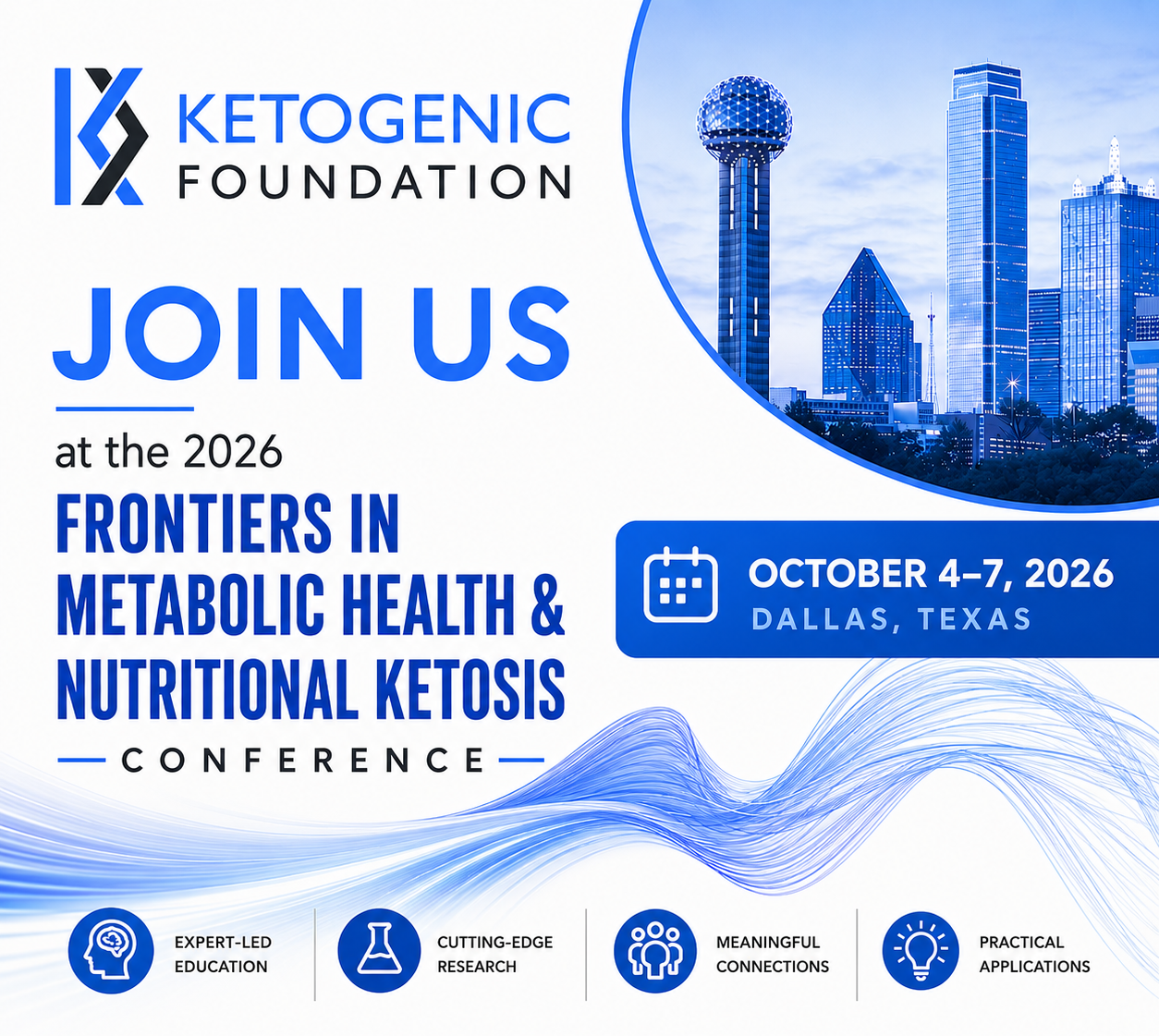
A week later, we head to the very first Frontiers in Metabolic Health & Nutritional Ketosis conference, presented by The Ketogenic Foundation. Our two posters have been accepted for this inaugural year. Our poster presentations about our studies and our programs on metabolic ketogenic therapy (KT) matter here too, even with this friendly audience.
|
CMHRC is presenting the first ever research study on the impact of KT for children living with bipolar disorder. We're bringing real world evidence from the families who are doing KT at home, around real schedules, real budgets, and all the other daily burdens a household carries. Our data reflects the lived experience of a population that has yet to be looked at by others. We're genuinely honored. First-year programs have to be selective, and being part of the group that sets the tone for a conference the field will be attending for years to come isn't something we take lightly.
|
|
Integrative Medicine for Mental Health Conference |
A day after the Ketogenic Foundation, we're in San Diego for the Integrative Medicine for Mental Health Conference, and this one's different for us. We're not presenting, we're there to listen, converse, and connect. IMMH gathers clinicians working in
|
integrative mental health and functional medicine psychiatry, and this year's theme looks at the anthropogenic drivers of mental health, meaning the human behaviors, social structures, and environmental factors shaping how people feel and function. Metabolic therapy is one piece of a much larger picture, and the practitioners in that room are thinking about and working within that larger frame. We talk about our work a lot, but some weeks are better spent paying attention to other's work. The connections that come from this listening grows our knowledge, and means more diverse resources for our community.
|
And speaking of listening, don't forget to follow us on social media, and pay extra close attention during September and October, for a look behind the scenes at these prestigious conferences! |
September is Suicide Awareness Month |
Researchers estimate that 50% to 60% of people who die by suicide experience a mood disorder, such as major depression or bipolar disorder. At CMHRC, we work to prevent early deaths by providing trusted resources, education, and community for families of children with mood disorders.
|
Your financial support makes this work possible. Your financial support saves lives.
-
$25 gifts support our social media groups that allow families to connect with one another 24 hours a day, 7 days a week in a safe and secure environment.
-
$50 gifts support our Wednesday Watch Parties, making them free for families to break down isolation and connect.
-
$75 gifts give a family discounted individual support through our Wayfinder Service.
-
$100 gifts support our Continuing Education program, allowing providers to get up-to-date information on research into the causes and treatments of childhood mental illness.
-
$250 gifts make it possible for us to run our Palliative ParentingTM study, giving families no-cost access to learning and community.
|
Back to School Essentials: Success in School with a Mood Disorder Wednesday, September 16, 2026 | 7:30-8:30 PM Eastern
|
As the new school year gets underway, join us for a conversation with Newmark K-12 Schools founder and co-director, Cynthia Allman. We’ll talk about the tools children and teens with mood disorders need at school to be successful, how parents can partner with their child’s school, and the approaches that educators can use to make school a rewarding learning environment for children with mood disorders. |
Each month CMHRC hosts a watch party for families on our most popular topics related to children's mental health. Join us for the watch and then engage in a live Q&A with CMHRC staff, other families, and providers. Ask your questions, share in dialogue and discussion, and find your community here. |
FREE CLINICAL SEMINARS FOR PROFESSIONALS |
Medication and Metabolic Agents in Psychiatric Practice Wednesday, September 23, 2026 | 5:00-6:30 PM Eastern
|
Psychiatric medications have a meaningful impact on metabolism. The most commonly used medications in psychiatry, from antidepressants to antipsychotics, can have short and long term impacts on both the patient's metabolic and psychiatric health. Join us for a deep dive into the intersection of medication and metabolism to understand its importance in your practice and for your clients. |
Sent by CMHRC ::unsubscribeLink::
|
|